 Bootstrap Beekeeping
Bootstrap Beekeeping
Bootstrap Beekeeping
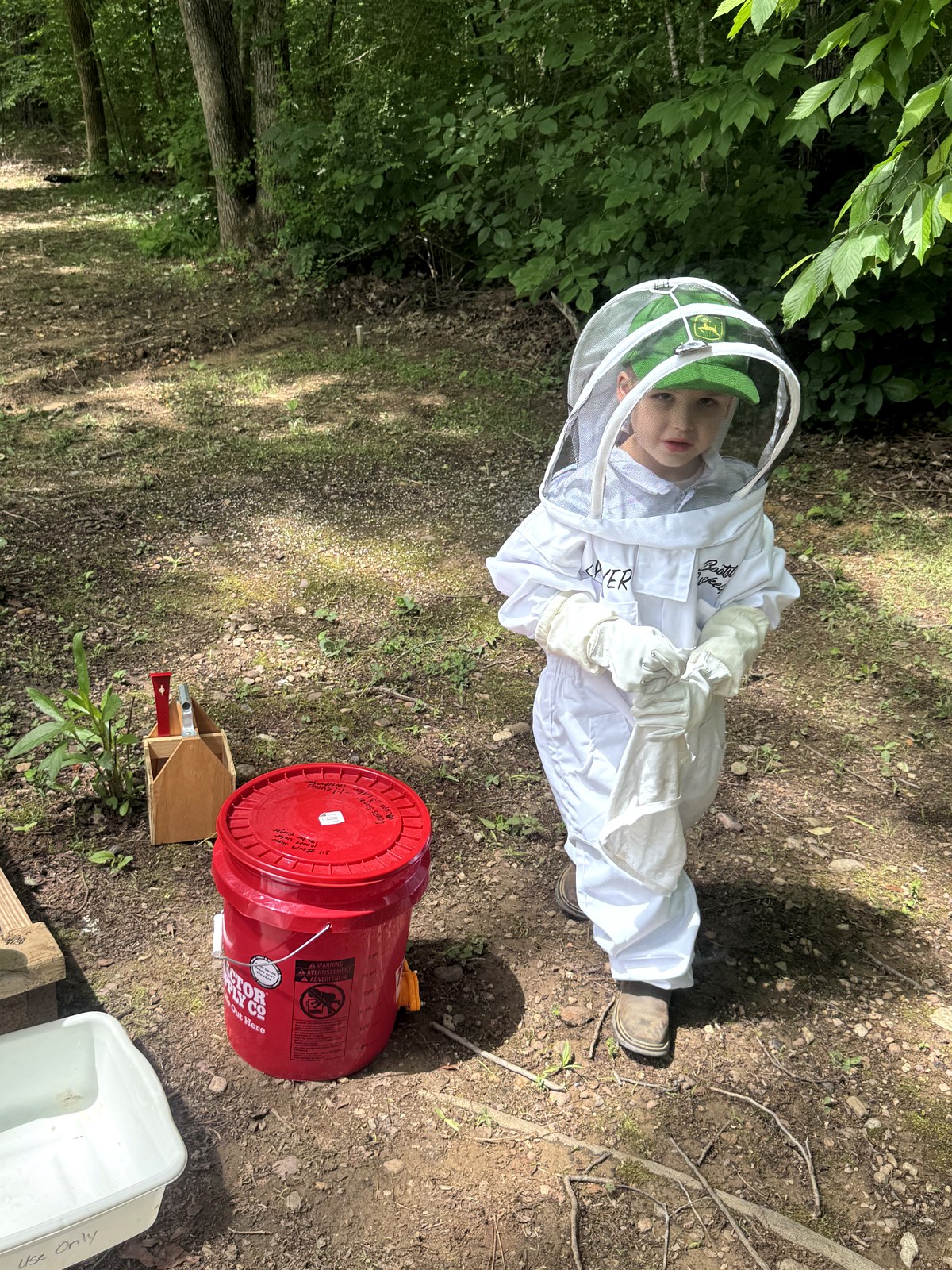
Not long ago, Sawyer wouldn't come outside when I went to the hives. He was six, the bees were new, and the buzzing made him nervous. I didn't push it. I just kept going, and I kept telling him about what I found — the eggs, the brood, who was bringing pollen home. I made it a story instead of a requirement. And eventually, the story pulled him in.
Suited up and ready. Bootstrap Beekeeping suit, John Deere hat, and somewhere to be.
Today he asked to come. That's the whole story, really — but I want to write it down properly because I think it matters more than just to us.
Sawyer is six years old and he has his own hive. We named it S's Hive and it's his — he named the queen, he knows how many boxes it has, and he asks about it the way kids ask about things they've decided belong to them. Getting him to the point where he actually wanted to walk up to it and do something took months of patience, and today was the payoff.
I didn't open the brood box. I didn't pull frames. I didn't hand him a frame covered in bees and tell him to look for the queen. That's not how you build confidence in a child — or in an adult, for that matter.
We started with the feeder boxes. On top of Sawyer's hive we run a simple feeder setup with mason-style jars of 1:1 syrup. The outer cover comes off, the jars lift out, you swap in fresh ones, the cover goes back on. That's it. It takes about two minutes, you're barely above the colony, and the bees barely notice you.
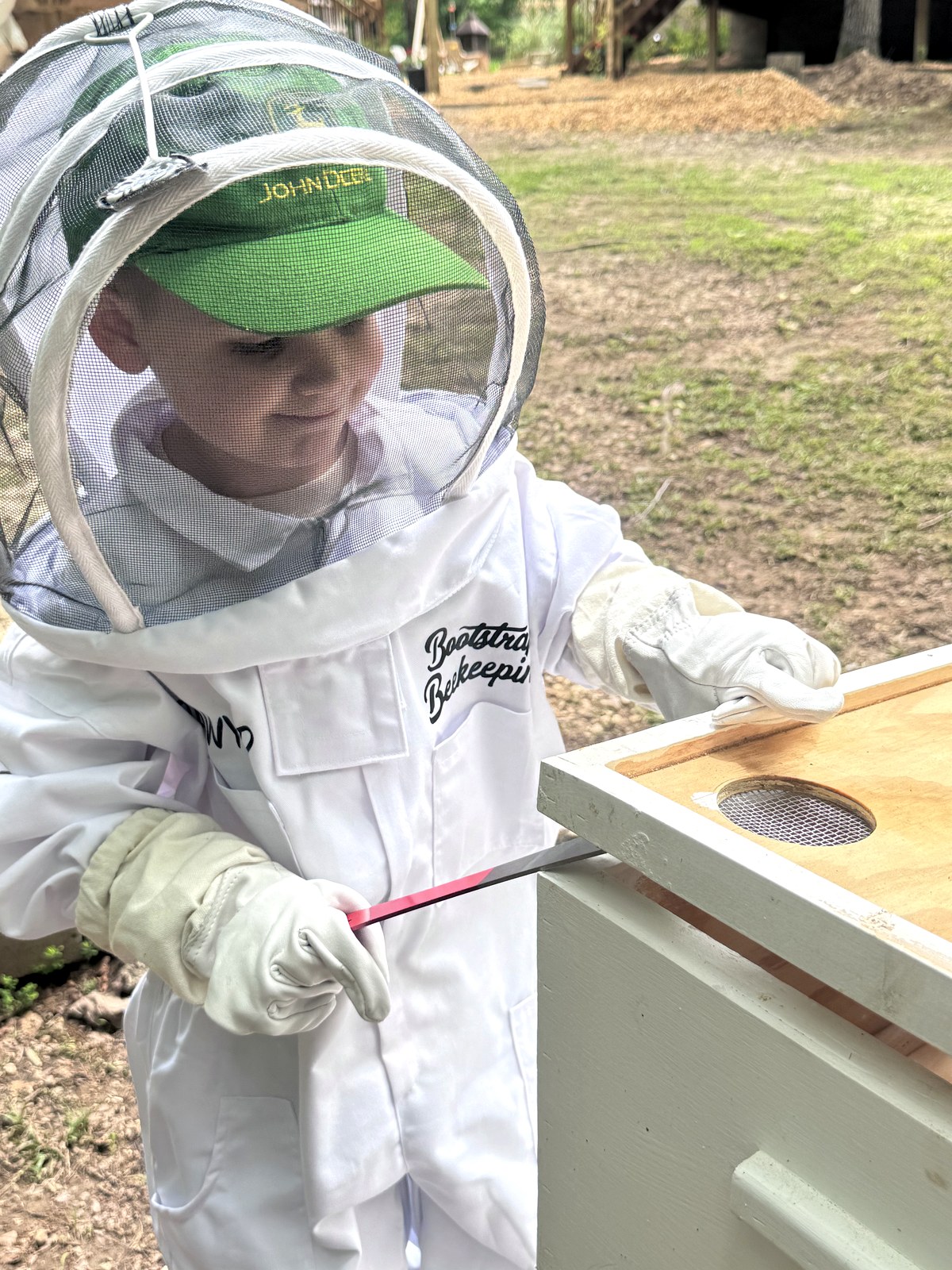
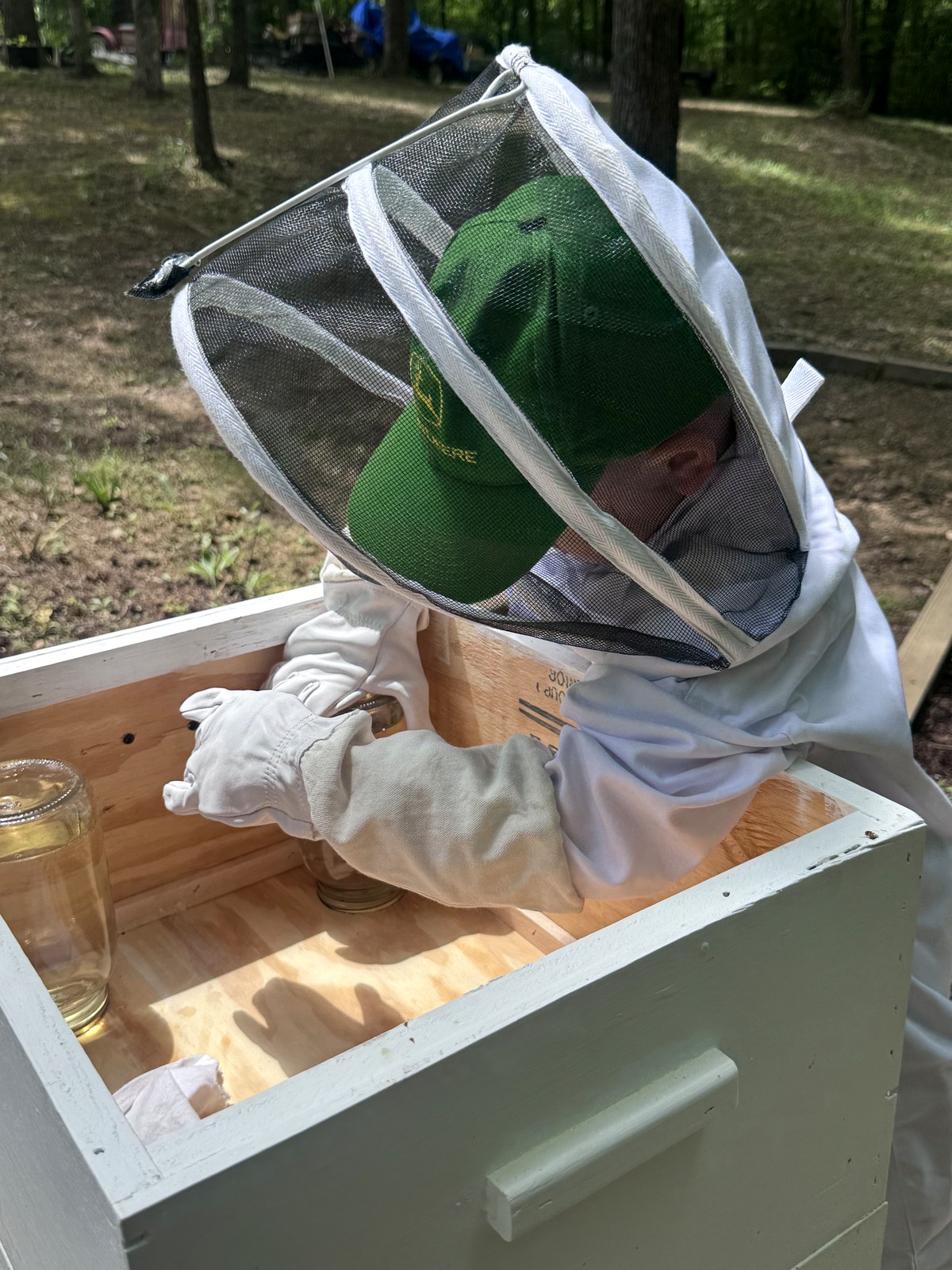
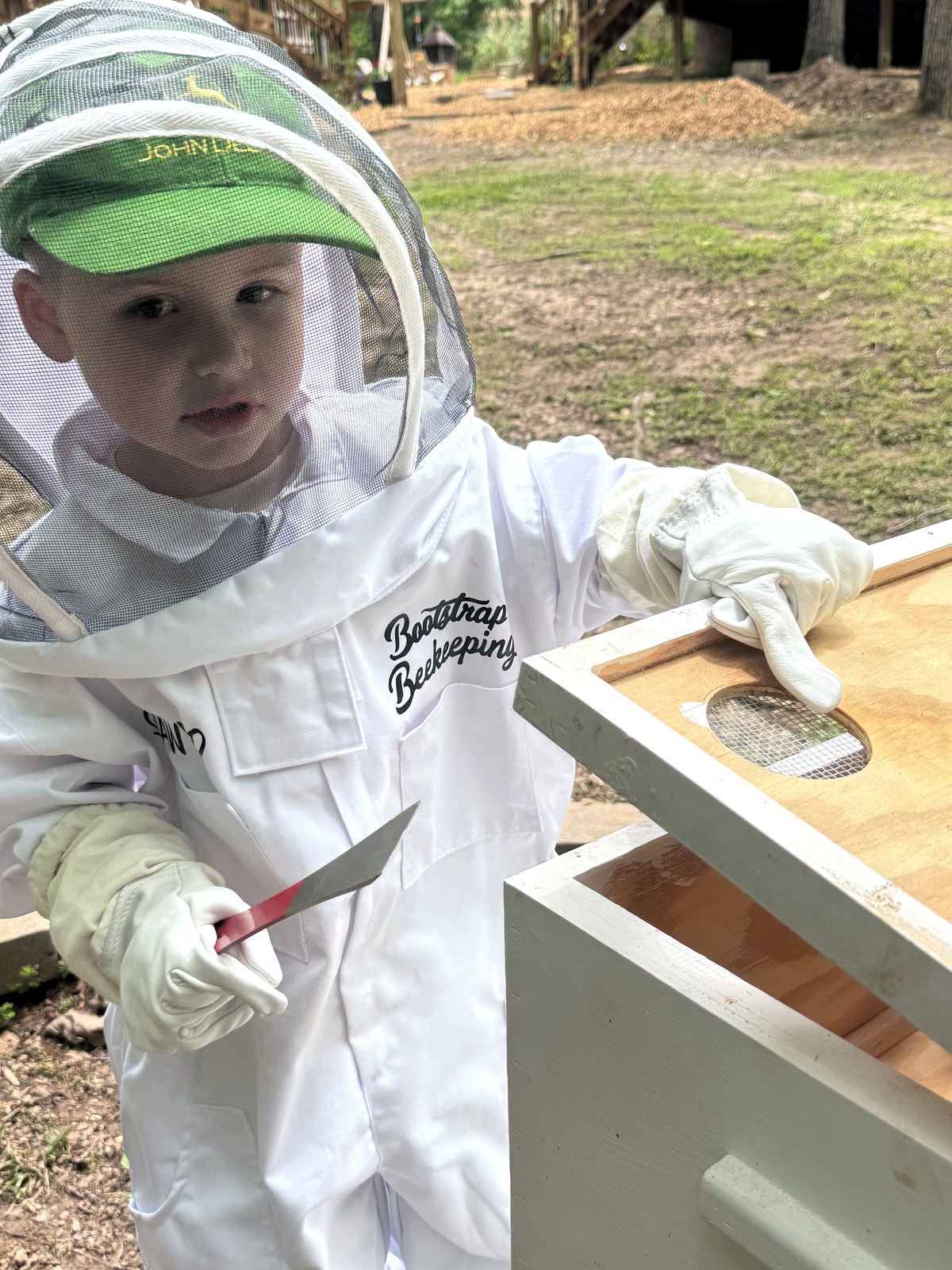
Left: hive tool in hand before we opened the feeder. Right: checking the jars himself.
But for a six-year-old who has never stood at a hive before, it's everything. It's a real task with a real result. The bees are there. The smoker is lit. The gloves are on. And when you finish and step back, something happened — you did something at the hive, and nothing went wrong.
I also brought a small aluminum step stool from the garage. That sounds like a minor detail but it wasn't. Sawyer is six years old and the hive boxes are chest height on him. Without the step stool he couldn't actually see into anything — he'd just be standing next to a buzzing box, which is exactly the situation designed to keep a nervous kid nervous. The step stool let him look in. He went from observer to participant just by being able to see.
We lit the smoker before we went to the yard. Partly because it's good practice, partly because Sawyer likes puffing it. That last part matters more than it sounds — if there's something at the hive that a kid genuinely enjoys doing, that thing becomes the reason they want to come. Smoke duty is his. He takes it seriously. It gives him ownership of a piece of the visit before we ever reach the hives.
Watching the entrance. The nervousness was gone by this point — replaced with questions.
After we finished with the feeders, Sawyer sat down next to the entrance of his hive and just watched. For several minutes he narrated what he was seeing — bees coming in heavy with pollen, bees fanning at the entrance, one bee that kept circling and wouldn't land. He had explanations for all of it, some right and some creative, and I mostly just listened and confirmed what he had right.
At one point I was filming him on my phone. Later, when I looked back at the footage, I noticed a bee had landed right next to his veil — close enough that you can see the yellow pollen packed into its baskets. Sawyer had no idea it was there. When I showed him later he wanted to know what color pollen it was and which plant it probably came from. Not scared. Curious. That's the whole goal.
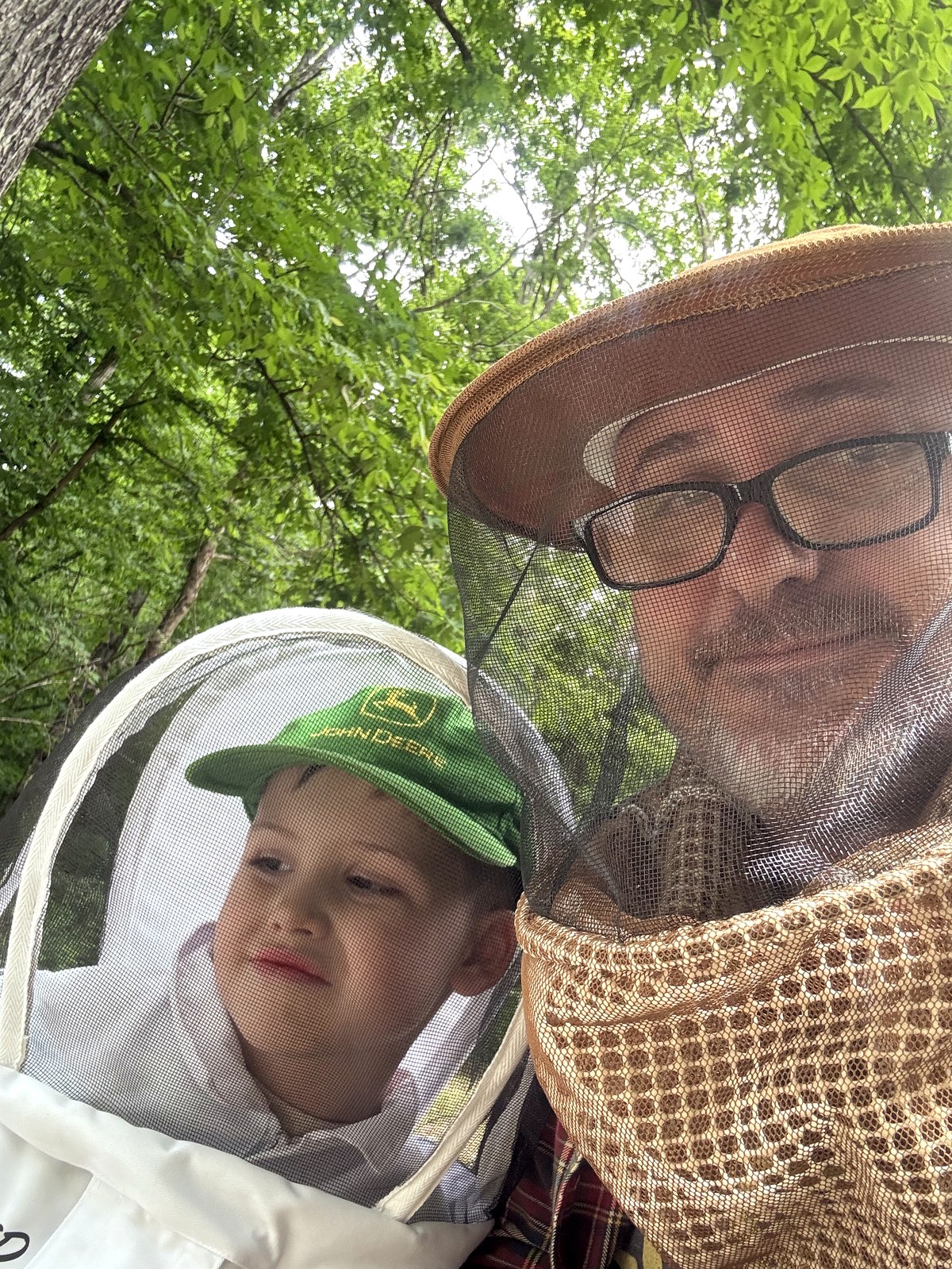
The two of us at Sawyer's hive. Somewhere in this frame, there's a bee with full pollen baskets he never noticed.
I was reading something online recently — another beekeeper sharing how they'd started bringing their kid to the hives. The responses were mixed. Some people got it immediately. Others were skeptical, maybe because it felt a little polished, a little too put-together to be real. And that got me thinking about why we're sometimes so guarded about this, as a community. Because the underlying instinct — that we should be bringing kids into this hobby, that we should be making room for them — that instinct is absolutely right.
We are an aging hobby. The average beekeeper is somewhere north of fifty years old. The knowledge we carry — about integrated pest management, about reading brood, about understanding what a healthy colony looks and sounds like — that knowledge doesn't transfer automatically. It has to be taught, and it has to be taught to people who aren't fifty yet.
Kids are the most natural students for this. They don't have a lifetime of fear to overcome. They haven't decided yet that bees are dangerous. If you get to them early and you do it right, they'll be the ones teaching their own kids someday. That's worth something.
We'll go back next week. Maybe we crack the lid. Maybe we just do feeders again and spend more time watching the entrance. Either way, Sawyer has already asked twice since we got home whether his bees finished the syrup yet.
That's the whole thing. That's what you're building toward — not a kid who can pull a frame without flinching, though that'll come. You're building a kid who thinks about the bees when he's not at the hive. A kid who has decided, in the way that kids make decisions that stick, that this is his.
The bees we're keeping today need someone to take care of them after we're gone. I'd like that someone to be Sawyer. But more than that, I'd like every beekeeper reading this to think about who they're passing their knowledge to — and whether they're making it easy or hard for the next generation to want to learn it.
— Josh, Bootstrap Beekeeping
Cherokee County, Alabama