Sawyer's Hive Comes Back
Three weeks that could have gone either way
It's been a while since we posted. Not because nothing was happening — because for a few weeks, what was happening with Sawyer's Hive wasn't good, and I didn't want to write about it until I knew how it was going to end.
In mid-August, Sawyer's Hive failed. Not slowly — enough that it needed an emergency shakedown, new frames, new equipment, starting over almost completely. A second shakedown a week later confirmed small hive beetles had been part of the problem, but also confirmed something worth holding onto: the queen was there, and she was laying.
The Low Point
Three weeks after the reset, I did a full inspection. The queen was still there, still laying correctly — single eggs, upright, right where they should be. But the population hadn't moved. Still thin. Capped brood on only two frames. Beetle counts running high for a colony this small — high enough that I sat with the real possibility this hive wasn't going to make it.
No smell, no sign of disease — the bees were ejecting pupae they didn't want, which is a good, healthy instinct, not a bad sign. But a small, struggling colony carrying that much beetle pressure is a hard combination to watch and not worry about.
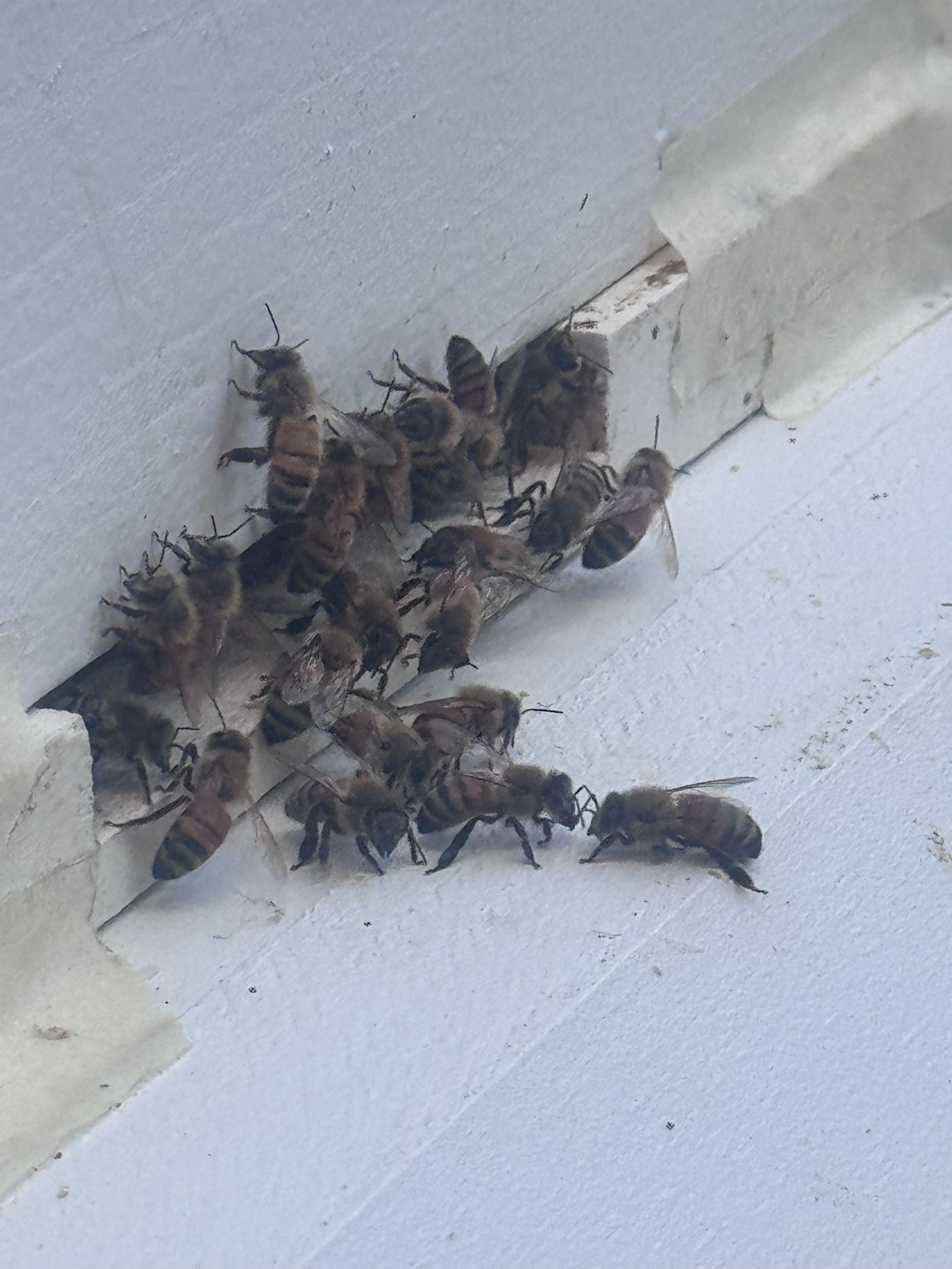
Where things stood after the shakedown — a small cluster, not the crowded frames we were used to.
What a Week Changed
One more week, one more inspection — and this time the story was different. Three full frames of bees, up from barely covering one. Solid eggs. Larvae at multiple stages, not just one. Capped brood spread across three frames instead of two. The colony had started tucking away a little nectar, the first sign of anyone thinking past today.
And the beetles that had me worried three weeks earlier — one beetle, seen on one frame. All four oil traps came back completely clean.
That's not a coincidence and it's not luck. That's a colony that spent three quiet weeks rebuilding while I was busy worrying about it, and finally had enough hands to show for it.
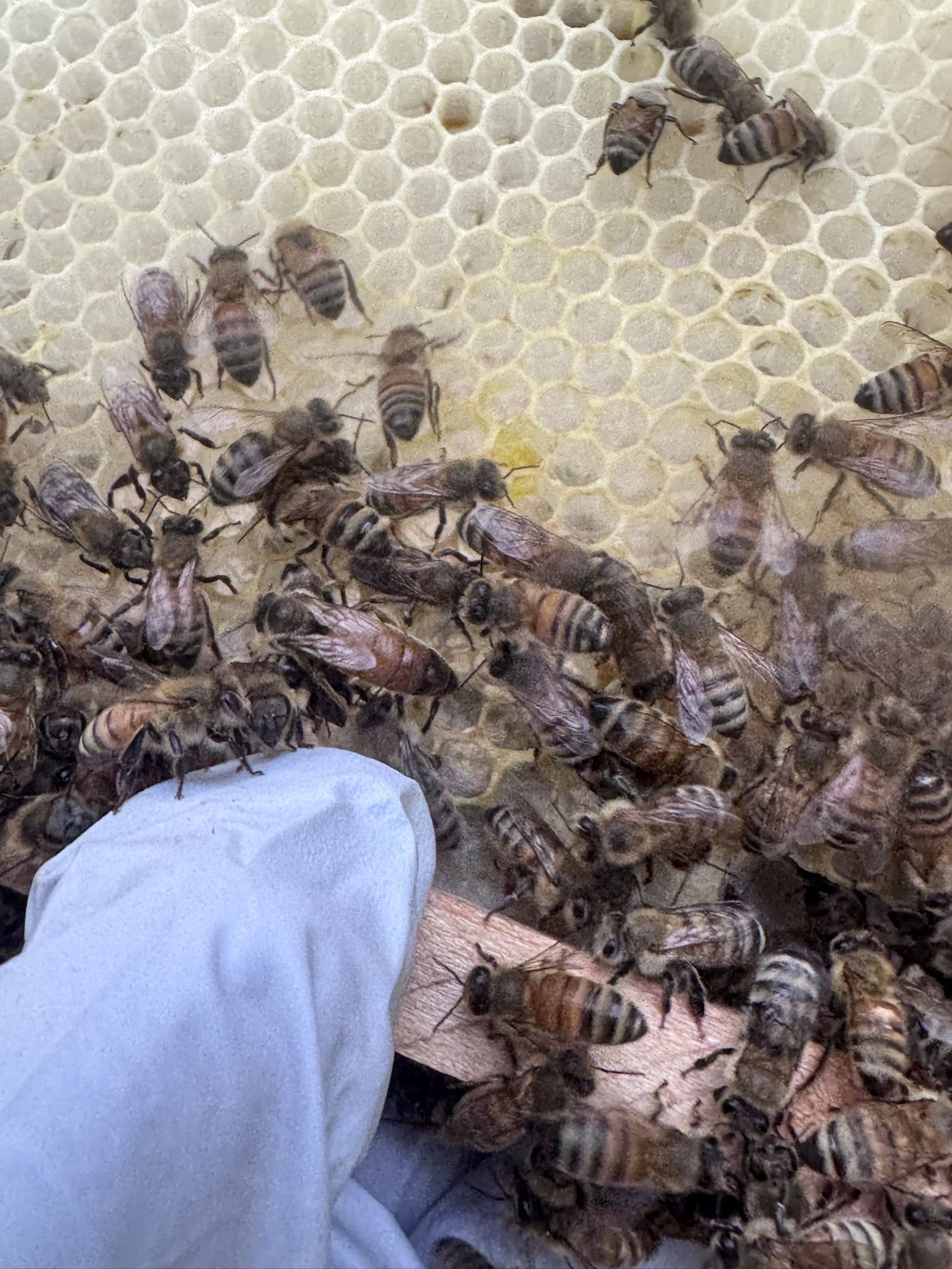
There she is — the whole reason any of the rest of this was worth waiting on.
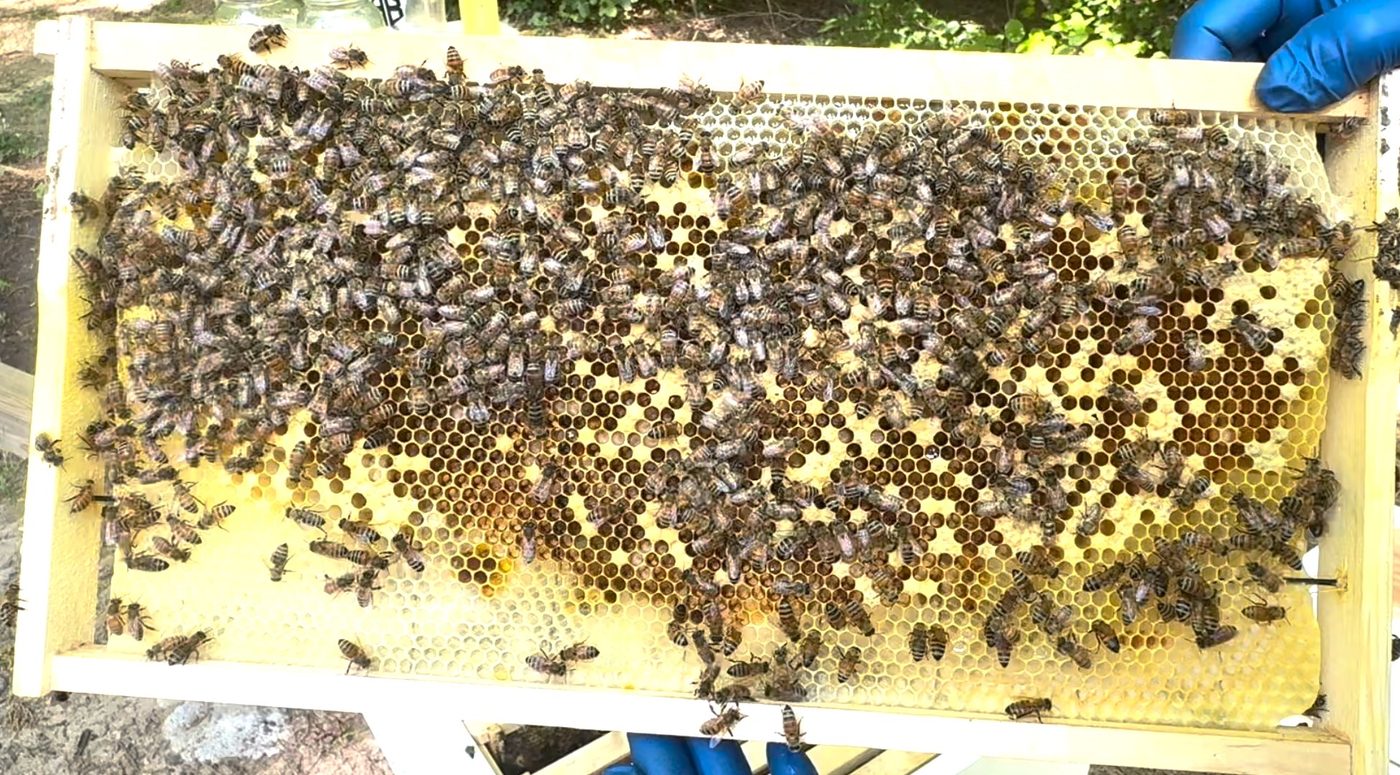
Sawyer's Hive back in April, at full strength — the version of this colony we're working to get back to.
Why We're Telling This One
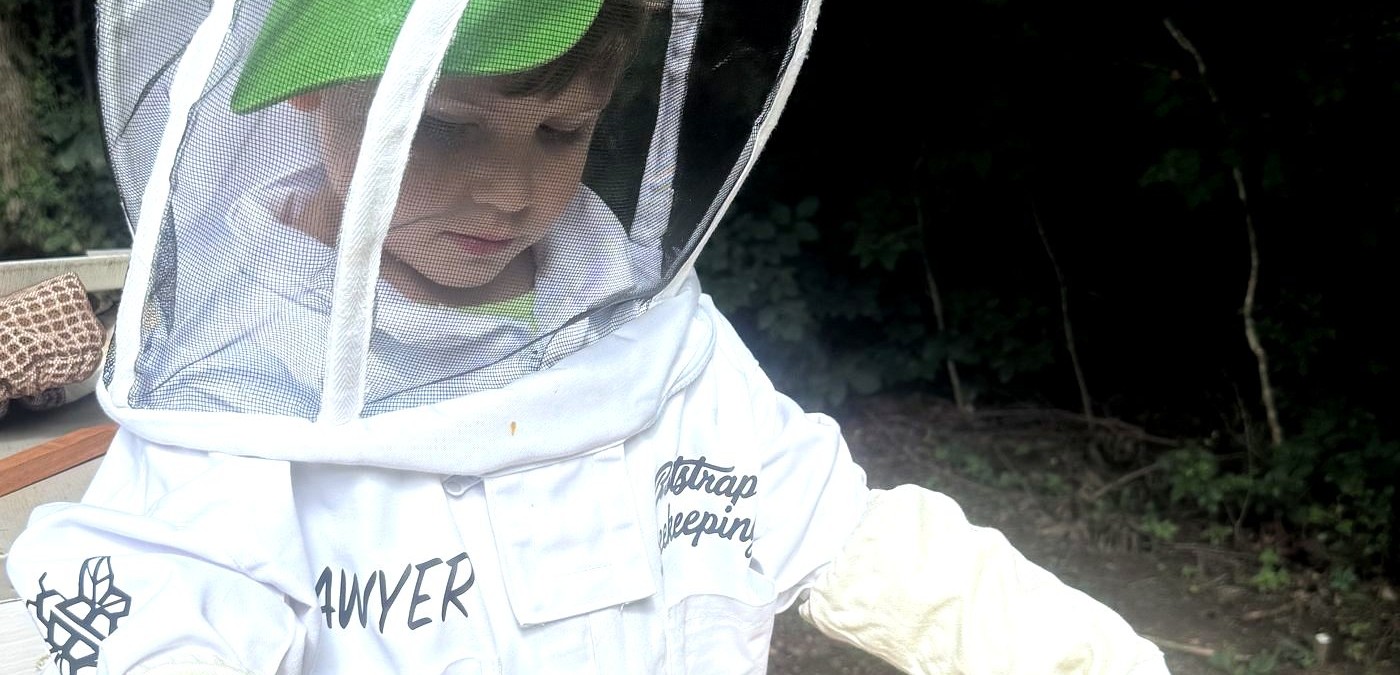
Every post before this one has been a good day at the apiary. This wasn't, for a while. But a hive named for a six-year-old who has his own suit and his own name stitched on it deserves the honest version of the story, not just the parts that photograph well.
We're not calling this one finished. Beetle pressure can come back, population takes real time to build, and a colony this young still has a lot standing between now and winter. But three weeks ago I wasn't sure this hive would still be here to write about. Today, it's rebuilding — and that's worth putting down in writing.
— Bootstrap Beekeeping · Cherokee County, Alabama
New Posts by Email
No spam, no selling your information. Just a note when something new from the apiary is worth reading.