Our First
Harvest
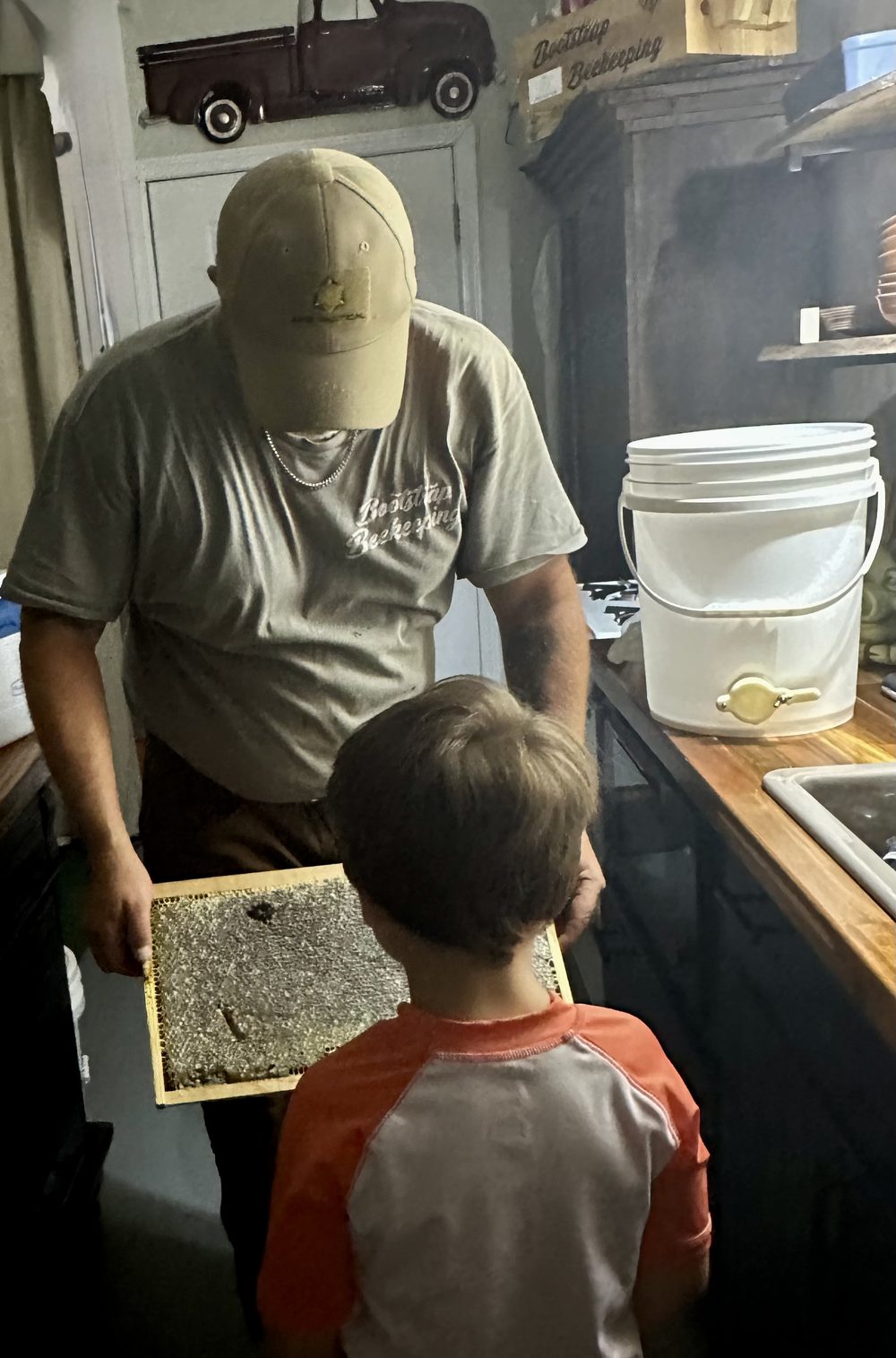
This week we pulled our first frame of honey — a fully capped frame of pure honey, no brood, just weeks of nectar turned into something worth keeping. It's a small harvest by most standards. Three and a half pints. But it's the first one, and the first one is the one that counts.
Picking the Frame
Every new beekeeper hears the same warning early on: leave the honey alone your first year, let the bees keep it for winter. That's good advice, and it's not one we ignored here. This wasn't a "let's see what we get" pull — the top box was genuinely running heavy, with several frames fully capped and the colony starting to backfill cells in the brood nest with nectar as the queen's laying slowed for the season. That's a sign of a colony with more stores than open space, not one that's short on either.
So we pulled exactly one frame — not to take honey for the sake of taking it, but to relieve some of that pressure and open up room. Even after pulling it, there was still plenty of capped honey left untouched across both boxes, and Alabama winters are mild enough that this colony was never going to be shy on stores. One frame, taken for a real reason, with a wide safety margin left behind.
We went with crush and strain rather than an extractor — no expensive equipment required, just a knife, a strainer, and patience. It costs the bees some rebuilding work they wouldn't have to do with an extracted frame, but for a first pull, it was the right trade.
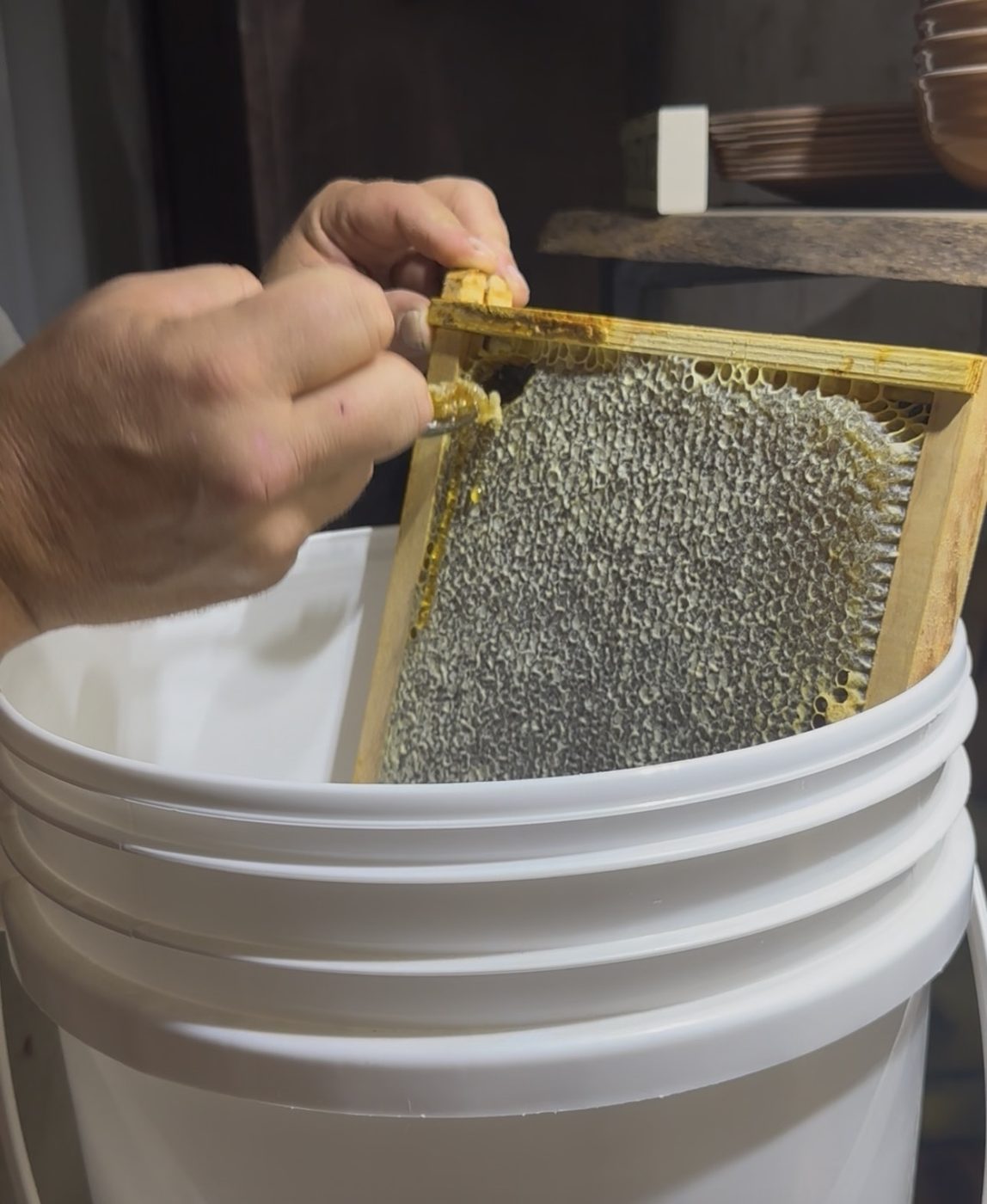
No extractor needed — just a knife, a strainer, and patience.
What Came Out of It
Once it was scraped and strained through a double sieve and mesh bag, we ended up with three and a half pints — a deep amber color, almost red when held up to the light, with a flavor that's surprisingly mellow for how dark it looks. Color and strength don't always track together in honey, and this batch is a good reminder of that.
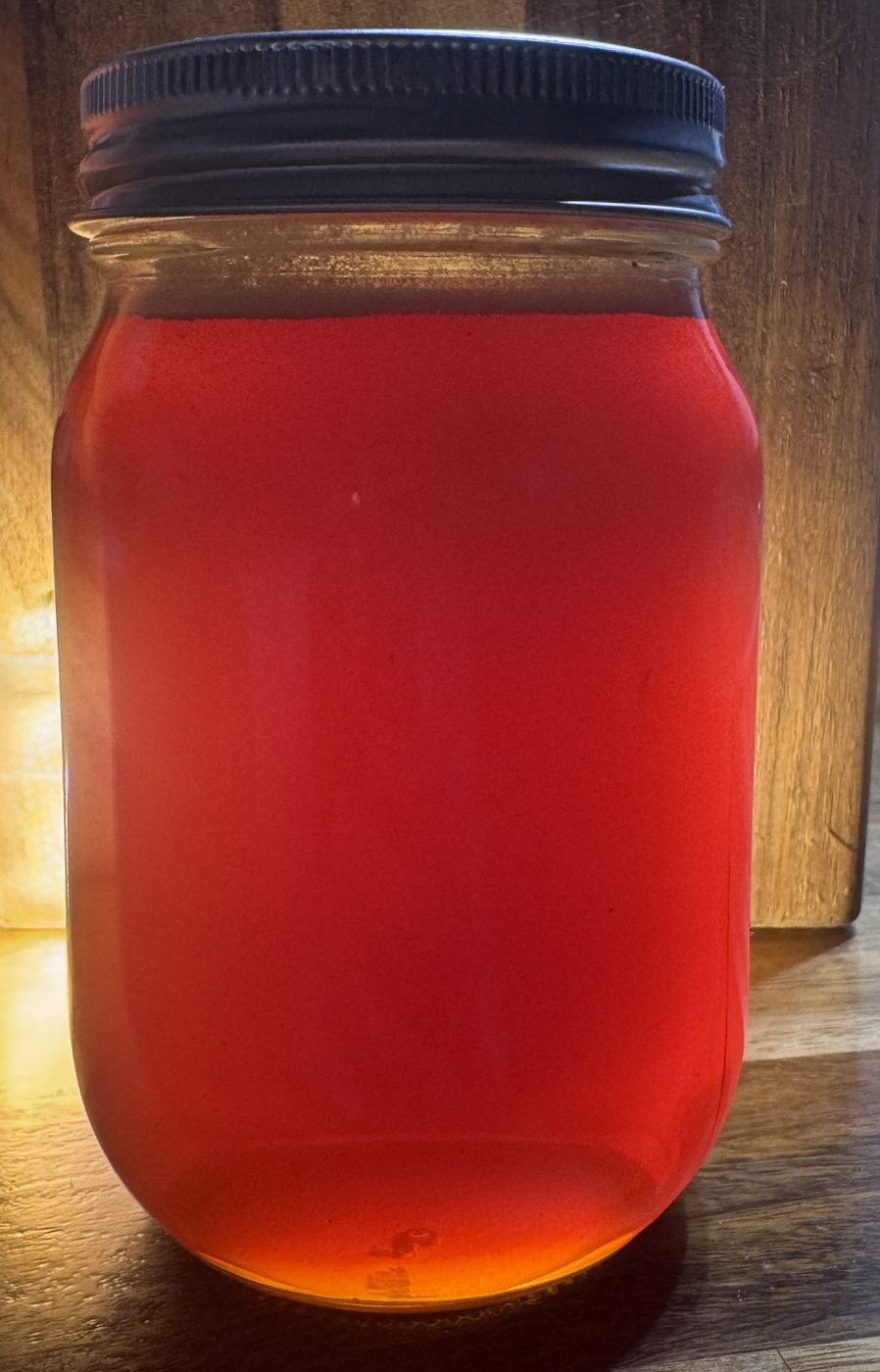
Backlit, you can really see the color — deep amber, almost red.
Where It Went
A harvest this size was never going to be about selling anything. One jar went up for my dad, who started all of this with me before he ever got the chance to see it through.
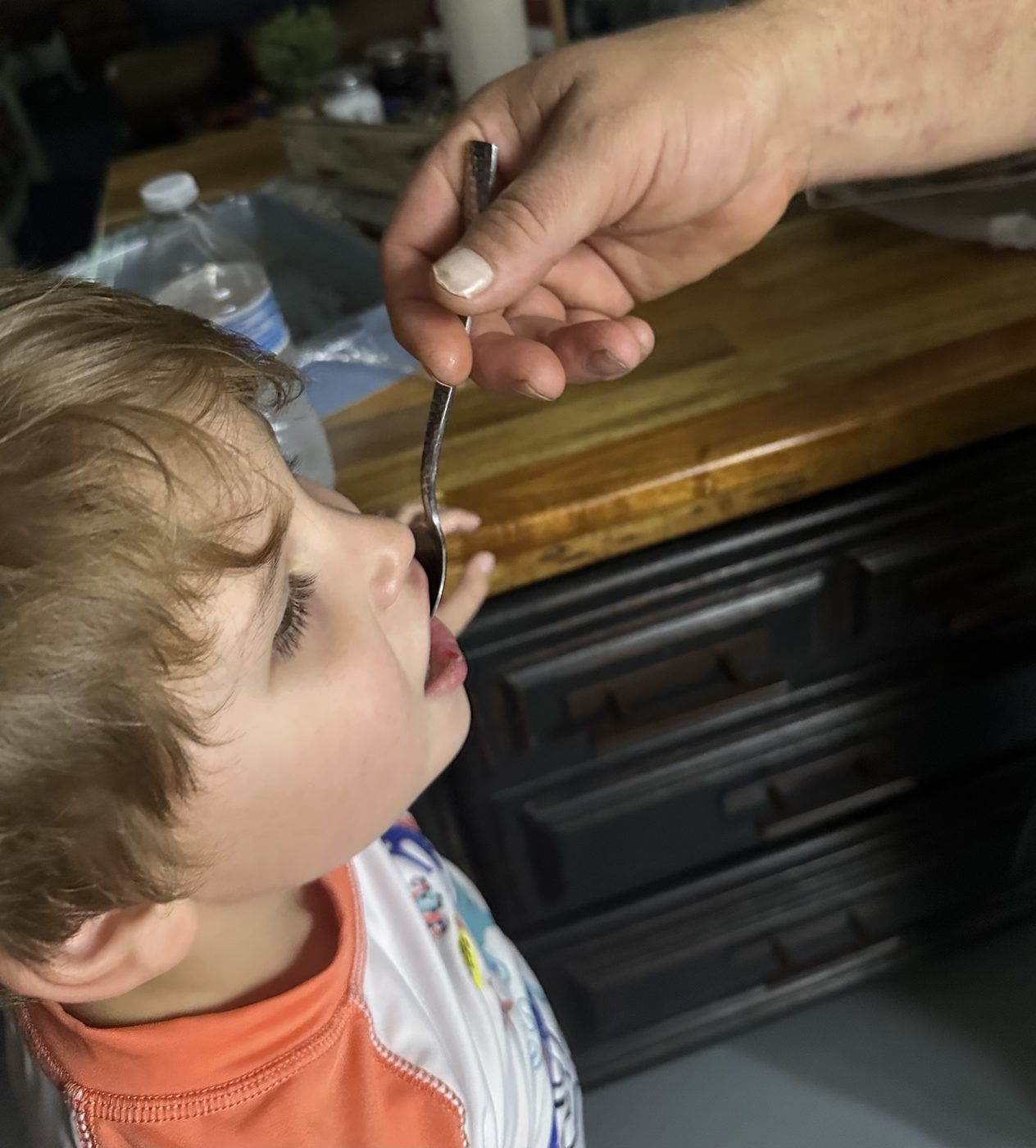
First taste, straight off the spoon.
My son was right there for the whole thing — watching the frame come out, curious about what was inside it, first in line for a taste once it was ready. That's really the whole point. Not the honey itself, but who gets to be there when it happens.
— Bootstrap Beekeeping · Cherokee County, Alabama
New Posts by Email
No spam, no selling your information. Just a note when something new from the apiary is worth reading.