 Bootstrap Beekeeping
Bootstrap Beekeeping
Bootstrap Beekeeping
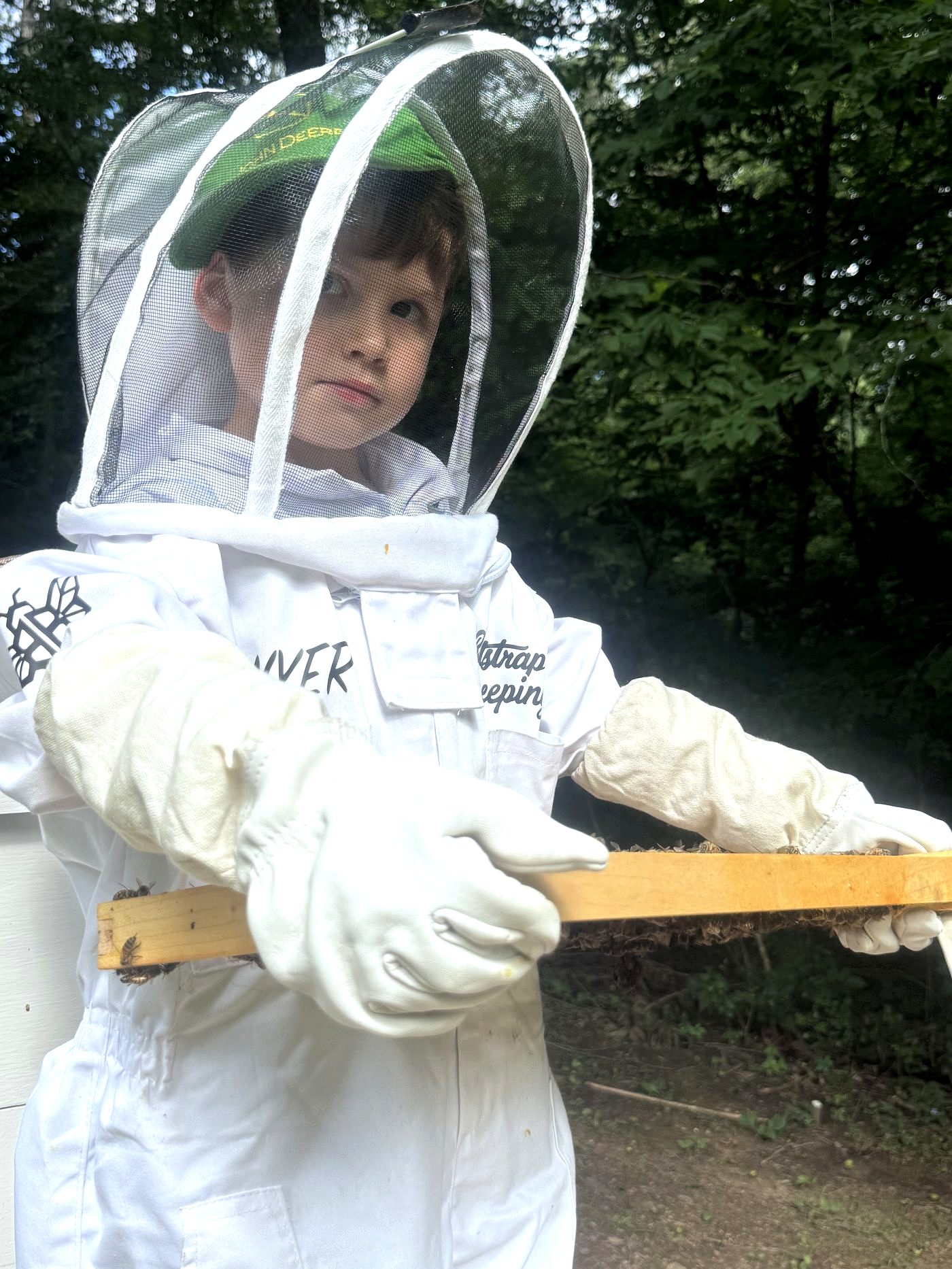
Sawyer is six years old. He has his own hive, his own suit, and last Saturday he asked to hold a frame himself.
Nobody told him to. I did not suggest it. He just looked at the frame I was working and said he wanted to hold it. That is the whole point of everything we have been doing out there since March.
I have never once forced Sawyer to come to the hives. Every single time, I ask him if he wants to go. I tell him his bees need him. I tell him I could use his help. And I let him decide.
That approach matters more than any piece of equipment you can buy. A child who comes to the hives because they want to be there is a completely different beekeeper than a child who comes because they were dragged along. The curiosity has to be theirs.
In the beginning he stood back and watched from a distance. That was fine. There was no pressure to get closer, no teasing, no coaxing. Just the two of us out there and the bees doing what bees do. Curiosity gets the best of all of us eventually. He started moving closer on his own terms, asking questions on his own schedule.
A few weeks ago he pointed at a forager and said look at the proboscis. I did not teach him that word. He picked it up from a television program because he had a reason to be paying attention. That is what genuine interest looks like in a six year old.
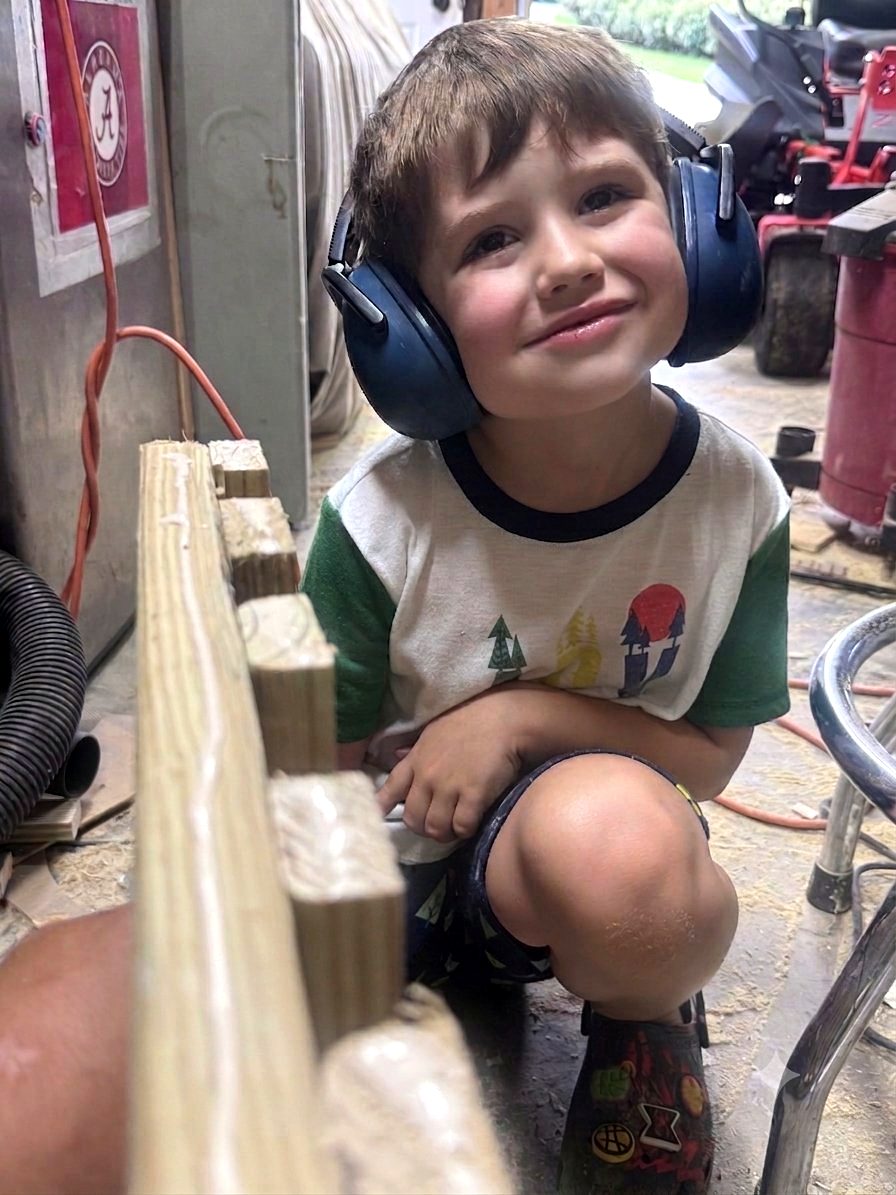
Sawyer helped build his own viewing platform from scrap lumber so he could see into the hive boxes. Hearing protection on, grinning the whole time.
Our hive stands put the boxes at a good working height for an adult. For a six year old that means looking up at the bottom of the bottom box. So we built a platform together from scrap lumber — nothing fancy, a simple slatted step that sits between the hives. His idea was to carry the lumber out to the apiary himself. He did it with a board balanced on his shoulder like he had been doing it his whole life.
That platform gave him something more important than a better view. It gave him a place that was built for him, in an apiary that has a hive that belongs to him. Ownership matters at every age.
We are lucky. Our hives are calm. But calm hives can still have bad days, and I never assume. Before Sawyer works close to the boxes I read the entrance activity, watch how the bees respond when I open the hive, and make my own judgment about whether today is a good day for him to be right there.
I have also taught him that bees will land on his suit and sometimes on his veil, and that is normal. No need to panic. And if I ever tell him to step away because I feel the hive mood shifting, he knows not to run. Turn around, walk slowly away from the hives, calm and steady. Bees track fast movement. A slow walk does not escalate the situation.
He knows this the same way he knows to put on his gloves before we crack the first lid.
Both hands, frame level, bees moving all around him. Six years old. He asked for this.
When it happened I coached him once. Both hands. Support the bottom bar. Do not squeeze the comb. He applied it immediately and stood there steady as a post while I watched. There were bees crawling across his gloves and up his veil and he did not flinch.
He also spotted the queen on that inspection. Picked her out on his own while I was still looking.
We ran an alcohol wash on both hives that day. I told him the bees were going to sleep for a little while. He did not love that part, but he understood it was how we keep the hive healthy. He did it anyway. That is the kind of thinking you want to see in a young beekeeper — doing the hard thing because it matters, not because it is easy.
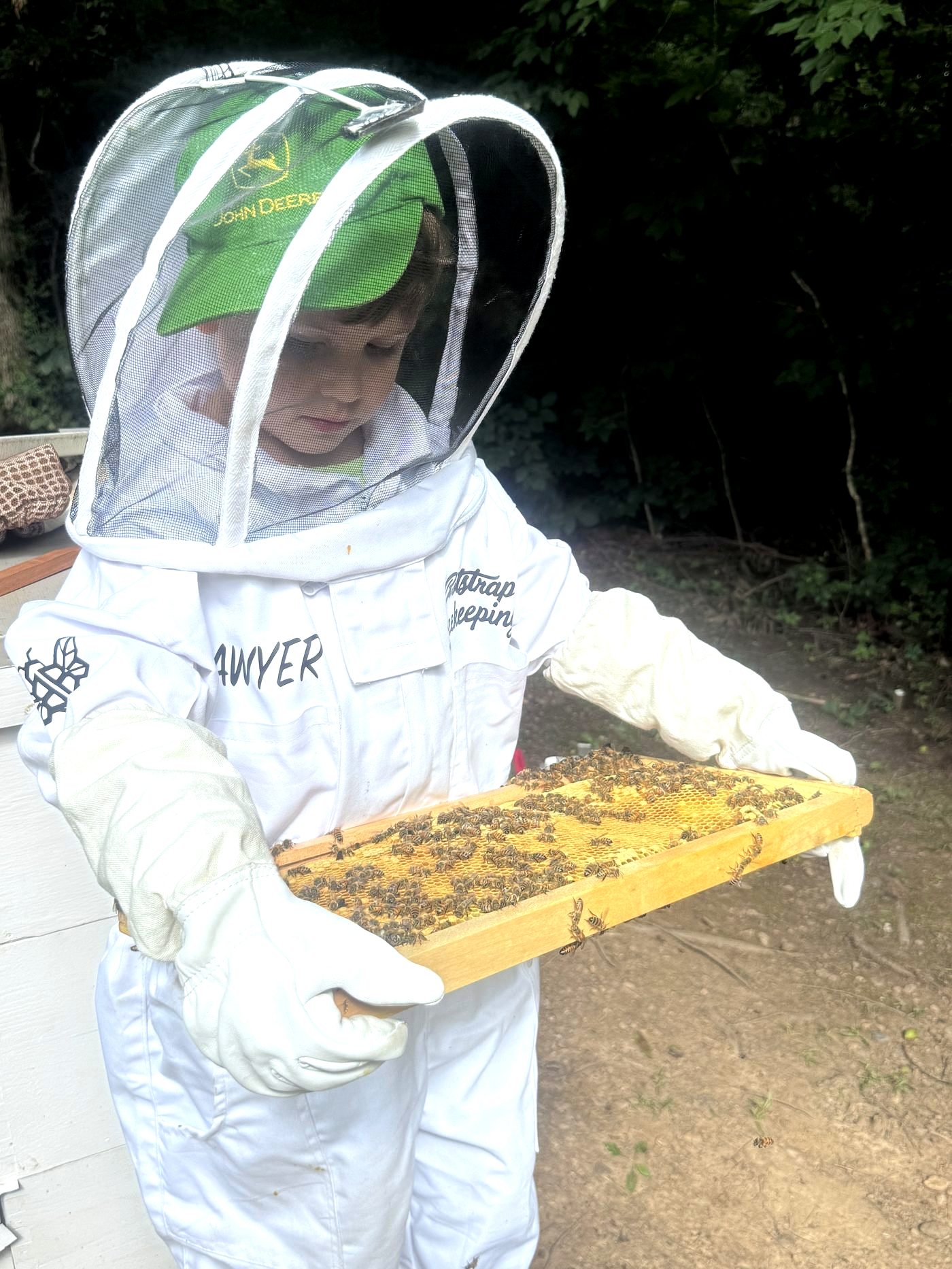
Studying the frame the same way every good beekeeper does — slowly, deliberately, looking for what the bees are telling you.
This applies beyond kids. It applies to anyone you are introducing to the hives — a spouse, a neighbor, a friend who is curious. The moment someone feels pushed or pressured around bees, the experience sours. Fear that comes from being rushed does not go away easily.
Give people a reason to be curious. Let them watch from where they are comfortable. Answer every question like it is a good one, because to them it is. Do not make the suit a big production. Do not talk about stings before they ask. Let the bees do the work of being interesting, because they will.
Sawyer started out watching from the house. Last Saturday he held a frame of live bees, spotted the queen, helped run a mite wash, and carried lumber on his shoulder to build himself a better view.
Nobody rushed him. He got there on his own.
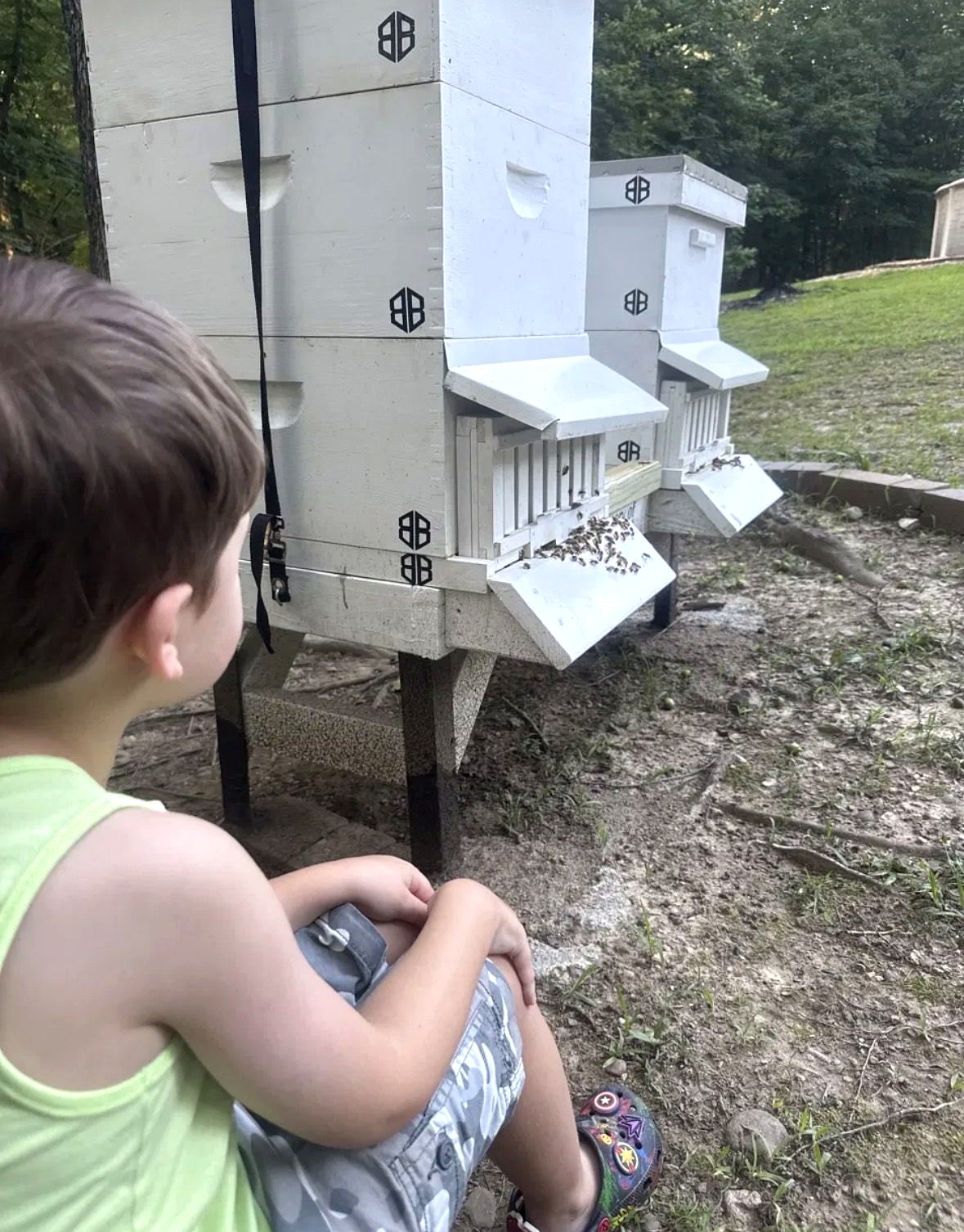
After a full day of inspecting, mite washing, and pool time, he walked back out and sat down in the dirt in front of the hives. On the way inside he said goodnight girls, I love you. He learned that from nobody.
— Bootstrap Beekeeping · Cherokee County, Alabama